

Volume begins building in early fall as retailers stock up for the holidays. Produce shipments shift with the growing regions. Then the year-end rush arrives, when shippers try to move as much freight as possible before their books close.
For weeks, or even months, a fleet that was comfortably sized in July suddenly does not have enough trailers. Turning freight away during peak season means leaving some of the year’s best-paying loads on the table and giving a competitor the chance to win the customer.
The obvious fix is more trailers. The less obvious question is how to get them without taking on equipment the fleet will not need once January arrives. Trailer rental allows carriers to add capacity without assuming substantial overhead that would otherwise only rack up debt during the busy season.
Why Rental Fits the Peak
A lease commits a carrier to a trailer for a set term, typically measured in years. That makes sense for permanent capacity, but it’s not a good fit for seasonal surges.
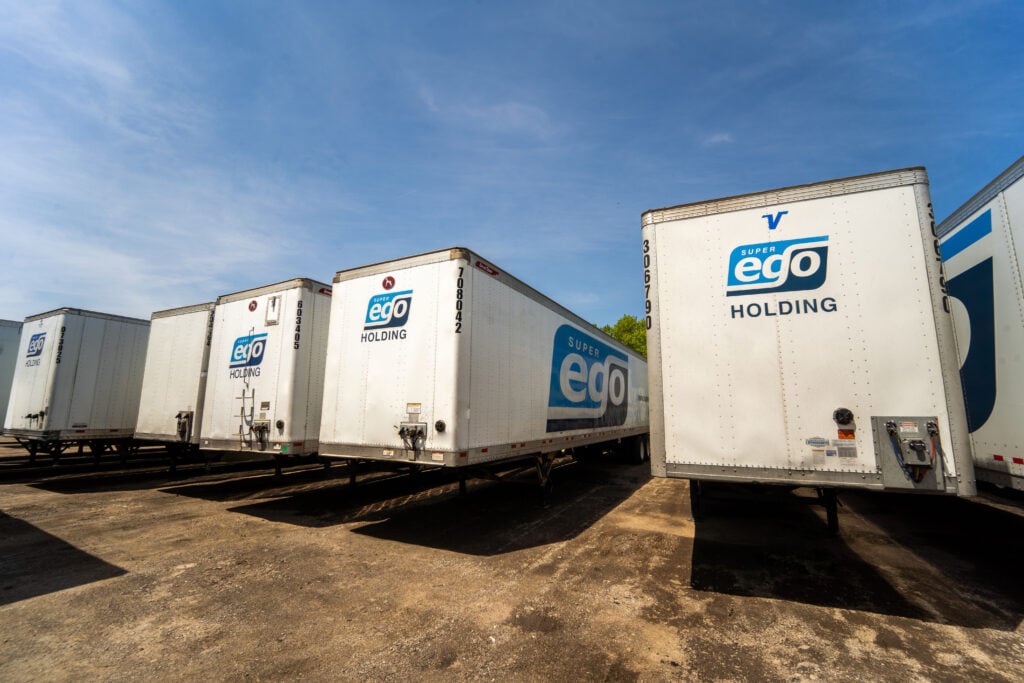
Carriers looking for extra trailers for the busy season can rent dry vans, reefers, or flatbeds from Super Ego Holding, the Elmhurst, Illinois truck and trailer leasing, rental, and sales company, without signing a long-term agreement. Super Ego Holding is not a freight carrier. People who search for “Super Ego Trucking” are usually looking for this company, which supplies equipment to the trucking industry rather than hauling freight itself. When volume returns to normal, the trailers go back.
It’s important to note that Super Ego Holding’s rental program covers trailers only. Tractors are available through leasing or direct purchase but are not rented. A carrier adding trailer capacity for peak season will still be pulling those trailers with trucks it already leases or owns.
Where the Extra Trailers Go
Peak season capacity problems show up in a few common ways, and each points toward a different trailer type.
- Dry vans for retail freight. Holiday merchandise, consumer goods, electronics, and household products move in enclosed 53-foot dry vans. Retail distribution often relies on drop-and-hook operations, where a carrier leaves trailers at a shipper’s dock to be loaded on the shipper’s schedule. Each additional customer drop yard ties up more trailers, and peak season multiplies the demand.
- Reefers for food and produce. Holiday food demand and seasonal produce put pressure on refrigerated capacity at the same time. Super Ego Holding‘s reefers are rated to hold temperatures from minus 80 to plus 100 degrees Fahrenheit, which covers frozen, chilled, and heated loads.
- Flatbeds for year-end projects. Construction and industrial customers sometimes push to finish projects or move materials before year-end. Open-deck trailers handle machinery, building materials, and oversized loads that will not fit in a van.
Making Rental Pay Off
Renting trailers for peak season works best when it is planned well in advance. A few practices help.
- Forecast early. Look at last year’s peak volumes and this year’s customer commitments. Estimate how many extra trailers will be needed and for how long.
- Match the trailer to the freight. Renting a dry van when the extra freight is temperature-sensitive solves nothing. Be specific about trailer types.
- Count the power units. Extra trailers only help if there are enough trucks and drivers to move them. Rental capacity should line up with available tractors and drivers, or with drop-and-hook arrangements where trailers sit at docks.
- Know the return date. Plan when each rented trailer will come back so it does not linger on the books after volume drops.
- Inspect at pickup and return. Document trailer condition at both ends of the rental to avoid disputes.
When Rental Is Not the Answer
Rentals are best used to manage acute, seasonally defined surges in demand. If you are renting the same number of trailers for most of the year, it may indicate sustained growth that warrants a permanent increase in capacity.
Super Ego Holding offers fleet leasing and direct purchase for trucks and trailers, and zero-down lease terms are available to carriers who qualify based on credit and business history.
Reviewing rental usage after the season ends is a practical way to decide whether some of that capacity should become permanent.
Planning Ahead for the Rush
Peak season does not arrive by surprise. It comes at roughly the same time every year, and carriers who plan for it tend to capture more of the freight it brings.
Trailer rental from Super Ego Holding gives a fleet a way to grow for the busy months without carrying that size through the slow ones, which is the kind of flexibility that keeps a trucking business profitable across the full year.
Soyez le premier à commenter